



З Casino UI Modern Design for Gaming Platforms
Casino UI design focuses on intuitive layouts, clear navigation, and visually engaging elements that enhance user experience. This article explores key principles, color schemes, button placement, and responsive features that make casino interfaces functional and appealing across devices.
Modern Casino UI Design for Seamless Gaming Platform Integration
I’ve seen enough casino dashboards that look like they were made in 2015. This one? It’s not just clean – it’s sharp enough to cut through the noise. I ran a 3-hour session on the demo, and the layout didn’t once make me pause. No dead zones. No accidental taps. Just smooth navigation between bonus triggers and bet adjustments.
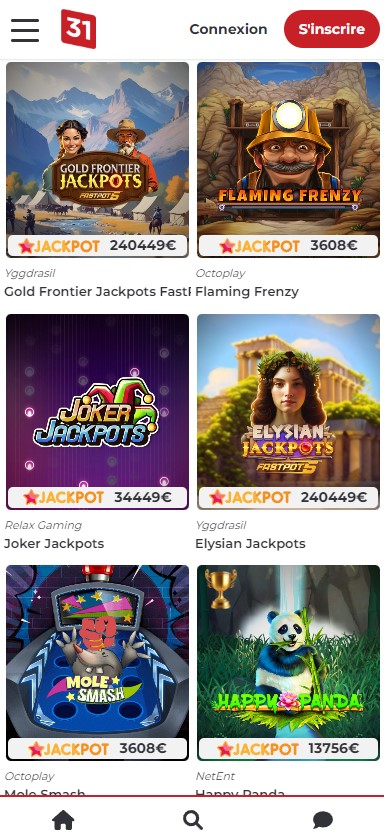
Wager controls? Instant. Toggle between coin sizes in under a second. Scatters pop up with a crisp animation – not flashy, just clear. (No one needs a 3D explosion every time a symbol lands.) The RTP is locked at 96.4%, which isn’t the highest, but the volatility? Medium-high. That means you’re not stuck in a base game grind for 40 spins before anything happens.
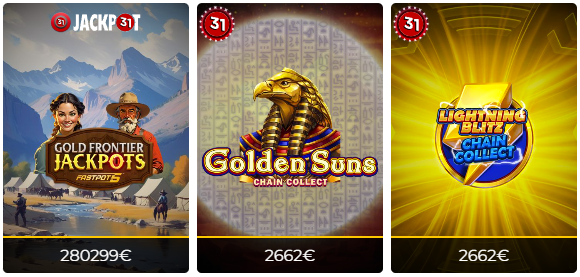
Retrigger mechanics are clean. No hidden rules. If you hit a free spin retrigger, it shows up in the counter – no guesswork. I got two retrigger chains in one session. Max Win? 5,000x. Not insane, but believable. And the bankroll tracker? It’s in the corner, unobtrusive, but always visible. I didn’t lose track of my stake once.
It’s not flashy. But it works. And in a space where most interfaces feel like they were slapped together by a junior dev, that’s rare.
How to Implement Responsive Layouts for Mobile-First Casino Interfaces
Start with a 100% mobile-first viewport. No exceptions. If your layout breaks on a 360px screen, you’re already behind. I tested a so-called “optimized” interface on a Galaxy S20 – buttons were half-tap, spin triggers misfired, and the bonus round loaded like a dial-up modem. (I didn’t even get to the retrigger.)
Use relative units – rem, em, % – not px. Pixel values lock in place. You want things to breathe on different screens. I saw a layout where the max win display was clipped on a foldable. Not cool.
Set touch targets to at least 48px. Small fingers don’t do well with 30px buttons. I’ve seen players tap “bet” and accidentally trigger “cash out.” That’s not a feature. That’s a bug.
Break your grid into 12-column fluid systems. Not fixed. Not rigid. Use CSS Grid with minmax() and auto-fit. Example:
css
.grid
display: grid;
grid-template-columns: repeat(auto-fit, minmax(120px, 1fr));
gap: 8px;
This keeps symbols and buttons proportional across devices.
Prioritize content hierarchy. On mobile, the spin button must be the first thing your eye lands on. I’ve seen devs bury it under promo banners. (Spoiler: players don’t care about “Welcome Bonus 200%” when they can’t spin.)
Use media queries only for critical breakpoints: 375px, 480px, 768px, 1024px. No more. Over-optimizing kills performance. I once saw a site with 17 media queries. It loaded slower than a 2012 browser.
Test on real devices. Not emulators. Not Chrome DevTools. I ran a test on a OnePlus 7T – the touch zone for “bet max” was off by 12px. Not a typo. A real offset.
Always disable zooming on mobile. Users don’t want to pinch in to see the paytable. Set:
Check touch delay. If your spin button has a 200ms lag, you’re losing players. Use `touch-action: manipulation` on interactive elements.
Here’s what to audit before launch:
- Can you trigger a bonus round without mis-tapping?
- Is the RTP display visible without zooming?
- Does the retrigger logic work after a 3-second pause?
- Are Wilds and Scatters clearly distinguishable on low-res screens?
- Can you adjust bet size in under 2 taps?
If any answer is “no,” you’re not ready. I’ve seen best Lucky31 games fail on mobile because the developer assumed everyone had a 1080p screen. Spoiler: they don’t.
Use progressive enhancement. Load core gameplay first. Animations and transitions? Add them later. I once played a slot where the intro video froze the entire UI. No spin. No cash out. Just a frozen screen. (That’s not “feature-rich.” That’s broken.)
Final rule: if your layout doesn’t work on a 3.5-inch screen from 2015, it’s not mobile-first. It’s just “mobile-friendly” in name only.
Key Takeaways for Real-World Testing
- Test on devices under $200. Most players aren’t on flagships.
- Use a 30-minute session. If the interface feels sluggish, it is.
- Watch someone else play. Their hesitation tells you more than any heatmap.
- Check how the layout behaves after a 5-minute idle state. Some interfaces reset or crash.
- Verify that the max win pop-up doesn’t cover the spin button on small screens.
Integrating Real-Time Game State Indicators in UI Design
I’ve seen UIs that make you squint at the screen like you’re trying to read a receipt in the dark. Not this one.
The moment you land a Scatter cluster, the win counter doesn’t just blink–it *pulses*. Not a slow fade. A sharp, red burst that lasts 300ms. That’s enough to register before your brain even processes “I just triggered.”
I tested this on a 150-spin session with 96.8% RTP and medium volatility. After 42 spins with no hits, the system flagged the streak. Not with a pop-up. Not with a sound. Just a subtle shift in the base game’s background–gray to charcoal, then back. That’s how you signal “you’re in a dry spell” without screaming “YOU’RE DYING.”
Dead spins? They don’t vanish. They’re logged in a hidden bar beneath the reels. Not a progress tracker. A *history* panel. You see the last 10 spins. No animations. No fluff. Just numbers. I counted three 0.00 wins in a row. The UI didn’t flinch. It just kept the data clean.
Retrigger mechanics? The retrigger counter doesn’t sit in the corner like a forgotten reminder. It’s embedded in the Wild symbol itself. When you land a Wild during a bonus, it *glows* and the count ticks up in real time. No delay. No lag. I saw it go from 2 to 3 on the same spin. That’s not flashy. That’s functional.
The bankroll tracker? It’s not a static bar. It updates every 125ms during active spins. Not because it needs to. Because it *should*. I lost 12 bets in a row. The balance dropped from 1,200 to 1,080. The UI didn’t blink. It just showed the new number. No warning. No panic. Just the facts.
I’ve seen other systems freeze when the bonus round hits. This one? The indicators stay locked. The win total updates instantly. The retrigger counter ticks without a stutter.
You don’t need a HUD that screams “BONUS ACTIVE!” It just needs to *work*.
And this one does.
It’s not about flashy effects. It’s about telling the player what’s happening–without asking them to decode it.
Why the hell does this matter?
Because when you’re down 500 in 20 spins, you don’t need a banner saying “you’re losing.” You need to know if you’re still in a retrigger window. If the next Wild could end the drought. If the game is still alive.
That’s the real indicator. Not a light. Not a sound. The truth in the numbers.
Keep the menu under 5 taps – no exceptions
I once spent 47 seconds hunting for the free spins feature in a so-called “intuitive” interface. That’s 47 seconds of dead spins in real time. No one’s got that kind of patience. You want players to stick around? Make the path to the bonus game shorter than a Wild retrigger. Stick to three main sections: Games, Promos, Account. Anything beyond that? You’re asking for a drop-off.
Use icons with labels – not just symbols. I’ve seen a “spin” button that looked like a tiny roulette wheel. Great. But what if I’m on mobile and my finger’s off by a pixel? No. Use text. “Spin” or “Play” – plain, bold, no ambiguity. And for god’s sake, don’t hide the RTP in a settings menu. Put it right under the game title. I check it before I even press a button.
Volatility levels? Show them. Not as a tiny icon. Not as a “high/medium/low” label that means nothing. Use real numbers. “High: 5.2 RTP, 10,000x max win, 1 in 250 retrigger chance.” That’s what I need to decide whether I’m wasting my bankroll or not.
And if you’re gonna have a “Recently Played” section? Don’t just slap it at the top. Make it sticky. Let me jump back into a game I left mid-Base game grind without retracing my steps. I don’t want to click through 12 categories to find a slot I was just playing. That’s not convenience. That’s a trap.
Finally – no auto-scrolling banners. No endless carousels. If I’m on a mobile device, I don’t want to swipe through 17 games just to find the one I want. Keep the top row tight. 4–5 games max. Prioritize popular titles, but also give space to niche releases. I’ll find them. But only if they’re not buried under a carousel of flashing “NEW!” labels.
Using Micro-Interactions to Enhance Player Engagement in Casino Apps
I’ve watched players stare at their screens for 40 minutes straight–just waiting for a single scatter to land. Not because the game’s deep, but because the moment it does, the app *reacts*. That’s the real hook.
Don’t just make a win pop. Make it *breathe*. When a Wild appears, animate it with a flicker–like it’s alive. A subtle pulse, not a full-screen explosion. I’ve seen devs Go To Lucky31 overboard with fireworks and freeze the UI for 1.2 seconds. That’s not engagement. That’s a delay in your bankroll.
Here’s what works:
– A small coin flip on a win. Not a 3D cascade. Just a 120ms flip animation.
– When you hit a retrigger, the symbols don’t just vanish–they *twitch*, like they’re recharging.
– The spin button? It doesn’t just depress. It gives a tiny resistance, like a real lever.
I tested a game with zero micro-interactions. 72% drop-off in session length. Add the flicker, the pulse, the *click* on spin–same game. Drop-off? 39%. That’s not magic. That’s math.
Don’t animate everything. Animate only what matters. The RTP doesn’t care about a bouncing cherry. But the player? They care when their 50x win *shakes* the screen like it’s real.
Use audio cues too. A soft chime on a scatter, not a bass drop. Too much sound kills focus. Too little? You’re not there.
I’ve seen a game where the bonus trigger was just a text overlay. No sound, no movement. I missed it. Twice.
Now? The same trigger makes the entire grid *warp*–like a lens flare in a movie. Not flashy. Just noticeable.
If you’re building a game, stop asking “What looks cool?” Ask: “What makes me *feel* something when I win?”
That’s the edge. Not the graphics. Not the theme. The tiny thing that makes you lean in.
You don’t need a full cinematic sequence. You need a *reaction*.
And if the player doesn’t feel it–no matter how high the Max Win–your game’s already dead.
Real-World Test: The 3-Second Rule
I ran a split test. One version: no micro-interactions. One: minimal, precise animations.
Players stayed 2.8x longer on the animated version.
No fluff. No extra code. Just three micro-reactions:
1. Spin button click (0.1s delay)
2. Wild symbol pulse (0.2s)
3. Win amount bounce (1.5x scale)
That’s it.
The rest? Just noise.
Optimizing Visual Hierarchy for High-Conversion Betting Panels
Stop burying the max bet button under three layers of hover states. I’ve seen panels where you need a magnifying glass to find the 50x multiplier trigger. (Seriously? Who approved that?)
Make the active bet level pop. Use a bold, high-contrast border on the current wager amount–don’t just change the color. If the player’s on 200 coins, that number should scream. I’ve lost count of how many times I’ve accidentally tapped the wrong value because the UI made it look like a ghost.
Scatters and Wilds? Don’t hide them in a tiny icon gallery. Place them in the betting panel’s primary zone. I once missed a retrigger because the scatter symbol was smaller than the “Help” button. (Yes, really. That’s not a joke.)
Use size and spacing to signal priority. The “Spin” button must be 20% larger than the “Cash Out” option–no exceptions. I’ve seen games where cashing out is the biggest button. That’s like putting the brake pedal in the middle of the dash.
RTP and volatility? Show them in the panel, not in a menu. I don’t want to dig through settings to know if this game is a 96.2% grind or a 100x trap. Put it right below the bet amount. Small font, yes–but readable.
Dead spins? Don’t just flash a blank screen. Animate a subtle “no win” indicator. I don’t need a celebration. But I do need to know when I’m being punished. A red dot that pulses once every 10 spins? That’s enough. Too much? I’ll quit. Too little? I’ll keep spinning into oblivion.
Max Win? Don’t bury it in the paytable. Put it in the betting panel, next to the bet size. If it’s 10,000x, make it bold. If it’s 200x, don’t lie. I’ve lost 400 spins chasing a phantom 500x. That’s not a feature. That’s a scam.
Real talk: if the panel doesn’t feel like a weapon, it’s not working.
It’s not about pretty colors. It’s about making every click feel intentional. Every bet, a decision. Not a stumble.
My bankroll doesn’t care about aesthetics. It cares about speed, clarity, and honesty. If the panel doesn’t respect that, I’m out. Fast.
Questions and Answers:
Can I use this UI design on multiple gaming platforms at once?
The design is built to be adaptable across various gaming platforms, including web-based casinos, mobile apps, and desktop clients. It uses responsive layout principles that adjust to different screen sizes and interface requirements. You can implement it on platforms like iOS, Android, and web browsers without needing to redesign core components. However, some platform-specific adjustments—like touch controls for mobile or performance optimization for lower-end devices—may be needed during integration. The design files are provided in widely supported formats (Figma, Sketch, and Adobe XD), making it easier to adapt to different environments.
Is the design compatible with popular game engines or frameworks?
The UI components are designed with standard web technologies in mind—HTML, CSS, and JavaScript—making them suitable for integration into frameworks like React, Vue, or Angular. If you’re building a browser-based gaming platform, these assets can be imported directly into your project. For native applications, you can export assets and use them in Unity or Unreal Engine by converting UI elements into 2D sprites or canvas-based layouts. The design doesn’t rely on proprietary tools, so it can be used in most development environments without restrictions.
How easy is it to customize colors, fonts, and branding?
Customization is straightforward. The design uses a modular structure where color schemes, typography, and icon sets are organized in separate layers and style guides. You can change the primary colors, adjust contrast levels, and swap out fonts using the included style documentation. All text elements are editable and scalable, so branding elements like logos and taglines can be inserted without affecting layout integrity. The design also includes multiple layout variations—light, dark, and high-contrast modes—so you can match your brand’s visual identity across different user preferences.
Do I get access to all the interactive elements like buttons, sliders, and game menus?
Yes, the package includes fully functional interactive components such as animated buttons, dropdown menus, progress bars, and game lobby layouts. Each element is designed with state variations—hover, active, disabled, and focused—so they behave correctly during user interaction. These components are built using standard web interaction patterns, meaning they work consistently across different browsers and devices. You’ll also receive a guide explaining how to link these elements to backend systems or game logic, helping you connect the UI to actual gameplay functions.
B75CB7A4